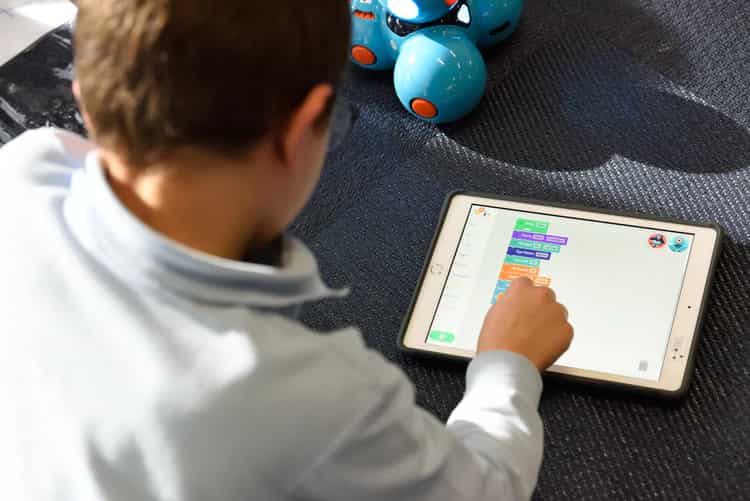
Modern parents face an overwhelming selection of educational apps claiming transformative learning outcomes. Yet independent research shows that 58% of apps marketed to children demonstrate lower-quality design according to developmental learning principles. The difference between genuinely effective educational tools and engaging entertainment masquerading as learning depends on evidence-based design, parental feedback, and demonstrated learning outcomes. The following ten apps represent those that combine scientific rigor with authentic parent validation and measurable results in 2026.
Why App Quality Matters: The Research Behind Real Learning
The effectiveness gap between quality educational apps and mediocre ones is substantial. A 2022 study published in peer-reviewed research found that children using interactive learning apps retained math concepts 30% better than those watching passive video instruction. Critically, research in the Journal of Educational Computing Research revealed that paid apps scored significantly higher on engagement quality than free apps, which often contain distracting gamification elements and excessive rewards that undermine learning.
The Four Pillars of Learning framework—developed by Stanford researchers and cited by Khan Academy Kids developers—identifies the characteristics that distinguish genuine educational experiences from content that merely entertains: active learning (cognitive effort), engagement in the learning process (meaningful feedback over flashy rewards), meaningful learning (connection to real-world application), and social-emotional development. Apps meeting these criteria consistently produce better outcomes across independent testing.
1. Khan Academy Kids: Free, Comprehensive, Non-Profit Foundation
Khan Academy Kids stands apart as the highest-quality free option available in 2026, backed by Stanford University experts and developed by the trusted nonprofit Khan Academy. The app covers math, reading, and social-emotional development for ages 2–7, with 1,000+ activities and stories. Critically, every feature prioritizes learning over engagement through flashy rewards—feedback is educational rather than celebratory, activity design emphasizes “minds-on” thinking, and no advertisements or data harvesting compromises the educational mission.
Parent feedback on Khan Academy Kids emphasizes consistency and trust. Users consistently praise the “well-established learning process” and highlight that children engage with “seemingly endless” engaging activities, with one parent noting the app’s thoughtful combination of story reading, letter tracing, and math practice without overwhelming breadth. Trustpilot ratings average 3.6/5 across Khan Academy products, reflecting reliability over flashiness. The free model removes barriers to adoption—no subscription costs, no advertisements, no pressure to upgrade for core functionality.
Limitations exist for children older than 7 or those needing advanced coding/STEM skills. Parents seeking breadth should complement Khan Academy Kids with subject-specific apps. However, as a foundational tool for ages 2–7, Khan Academy Kids delivers research-backed learning at zero cost.
Best for: Budget-conscious families, young learners ages 2–7, parents prioritizing learning science over flashy engagement
2. Homer: Personalized Reading with Proven Effectiveness
Homer distinguishes itself through a single, measurable outcome: 15 minutes daily use produces a 74% improvement in early reading scores. This result, documented across parent usage patterns, reflects Homer’s systematic personalization approach. Unlike apps that use generic progression, Homer adapts to each child’s learning pace, interest level, and current reading ability, adjusting difficulty in real-time across 1,000+ lessons and activities.
The app’s reading curriculum covers the full spectrum from phonics to comprehension, embedded in personalized stories and games rather than isolated drills. Parent testimonials emphasize the app’s ability to make reading enjoyable: “The activities are fun and engaging — and seemingly endless. One minute she’s having a story read to her, the next she’s tracing letters, the next she’s practicing sounds”. The 30-day free trial enables risk-free evaluation, and the $9.99/month pricing competes with other premium options while delivering superior documented results.
Homer’s strength lies in its narrow focus—reading excellence rather than comprehensive curriculum. Families needing math or science should pair Homer with complementary apps. For parents specifically targeting reading skill development in ages 2–8, Homer’s evidence-based approach justifies the subscription cost.
Best for: Children struggling with reading, parents wanting documented learning gains, ages 2–8 seeking structured literacy development
3. Epic!: Vast Library for Independent Readers
Epic! functions as the “Netflix for children’s books,” offering 40,000+ high-quality titles, audiobooks, educational videos, and graphic novels within a single app. The sheer volume addresses a core parenting frustration: insufficient reading variety leading to disengagement. Epic! combats this through personalized recommendations, multiple reading levels (picture books through chapter books), and the “Read-To-Me” feature supporting emerging readers through synchronized audio narration.
For educators, Epic! provides teacher tools and free classroom versions, reflecting a business model that prioritizes classroom integration. Parents praise the app’s ability to satisfy voracious readers with “Netflix-like” discovery, while teachers appreciate progress tracking and assignment integration.
At $9.99/month or classroom editions, Epic! serves readers ages 3–12 best. Limitations include less personalized instruction (it’s a library, not a teaching program) and reduced engagement for reluctant readers compared to Homer’s gamified approach. For families with independent readers who struggle to find sufficient material, Epic! eliminates that friction point.
Best for: Avid readers ages 3–12, families wanting massive title variety, children discovering reading interests independently
4. Prodigy Math: Engagement Without Sacrificing Learning
Prodigy Math operates as an RPG (role-playing game) where children build monsters, complete quests, and battle opponents—with each battle requiring solving math problems of increasing difficulty. Used by 50 million students and 1 million teachers globally, Prodigy covers 1,500+ math skills across grades 1–8 and aligns with major curriculum standards.
Parent feedback highlights Prodigy’s success with children unmotivated by traditional math apps. The game mechanic creates genuine engagement: kids want to solve problems to power their monsters, progressing through increasingly difficult content. Unlike apps criticized for making learning feel like work, Prodigy makes work feel like play. A free version provides full curriculum access; premium membership ($9.95/month) adds rewards and detailed parent insights.
Critical consideration: Some educators and parents note that Prodigy’s game emphasis can lead to answer-rushing behavior where children solve problems quickly to get back to combat rather than thoughtfully engaging with concepts. The app works best when parents discuss problem-solving approaches with children rather than treating the game as self-contained learning. For children who respond to gaming motivation, Prodigy’s engagement justifies including it in a learning toolkit.
Best for: Game-loving children, grades 1–8, families balancing engagement and curriculum coverage, children needing external motivation for math practice
5. SplashLearn: Structured Math & Reading Fundamentals
SplashLearn reaches 20 million downloads through a combination of curriculum alignment, adaptive learning paths, and gamification tempered with educational principles. The app covers math and reading for PreK through Grade 5, with 8,000+ interactive games and activities that adjust to each child’s skill level. Critically, SplashLearn maintains focus: unlike apps attempting comprehensive curricula, it delivers excellence in two core subjects.
Independent evaluation places SplashLearn among the better-designed apps for engagement quality because rewards and feedback support learning rather than distract from it. Progress tracking and parent dashboards provide transparency into skill development, addressing parent concerns about whether screen time translates to actual learning.
Comparison with alternatives reveals SplashLearn’s positioning: versus Prodigy (which prioritizes engagement/game design), SplashLearn emphasizes curriculum alignment; versus Khan Academy Kids (which is free), SplashLearn offers more advanced content for older elementary students. Pricing at $12.99/month puts it in the mid-range, justified by focused curriculum excellence.
Best for: PreK-Grade 5 students, families wanting curriculum-aligned practice, parents seeking progress transparency
6. Duolingo ABC: Free Reading Excellence Without Translation
Duolingo ABC specifically targets reading and writing fundamentals for ages 3–7 through phonics-based lessons, interactive stories, and games—completely ad-free. Unlike its adult language app, Duolingo ABC uses an age-appropriate curriculum designed for children, with professional voice actors, child-tested pacing, and no ads or in-app purchases.
Parent testimonials reveal the app’s pedagogical effectiveness: “Doing a way better job than I could ever do 😂” represents a common sentiment where parents recognize Duolingo ABC’s superior teaching methodology compared to their own instruction. The app’s phonics foundation builds reading fluency systematically rather than through memorization, addressing a core gap in many educational apps.
At no cost for the full version (with optional premium), Duolingo ABC represents exceptional value. Its narrow focus on reading/writing makes it less suitable for families wanting math or comprehensive curriculum, but as a standalone reading tool for ages 3–7, it competes with paid apps costing $10/month while maintaining free access.
Best for: Ages 3–7, reading fundamentals, phonics-based learning, families on tight budgets, children needing native language literacy support
7. Lingokids: Trusted by 160 Million Families
Lingokids achieves remarkable scale—160 million families globally trust it—through a design philosophy emphasizing safety, variety, and integrated learning across subjects. Designed for ages 2–8, Lingokids offers 600+ games and activities across literacy, math, science, social-emotional learning, and life skills—all within an ad-free, child-safe environment.
The app’s “Four Modes” structure provides flexibility: Play (individual games), Theatre (educational shows), Lessons (structured learning paths), and Playtogether (parent-child activities). This variety addresses different learning styles and allows parents to engage meaningfully with their child’s learning rather than treating app time as isolated screen time. Progress tracking enables parents to understand what their child is developing.
At $14.99/month (with free version available), Lingokids positions itself as a comprehensive platform rather than single-subject app. Parent reviews emphasize the breadth: “I love that it’s ad-free, safe, and educational, making screen time feel like a learning opportunity instead of just entertainment”. The Playtogether mode particularly resonates with parents seeking shared experiences.
Best for: Ages 2–8, families wanting comprehensive multi-subject learning, parents wanting to participate in child’s app learning, multilingual households
8. Reading Eggs: Structured Reading Program with Placement Testing
Reading Eggs serves ages 7–13 through a structured reading program combining placement testing, progressive lessons, and reward-based motivation. Unlike apps using generic level progression, Reading Eggs places children appropriately using an assessment, preventing frustration from mismatched content difficulty.
Parent feedback emphasizes the program’s transformative effect on reluctant readers: “Turned my reluctant reader into a kid who asks for ‘just one more lesson'”. The map-based interface and milestone rewards provide clear progress visibility, motivating children through achievement rather than arbitrary gamification. The program covers phonics, sight words, comprehension, and reading fluency across hundreds of lessons.
At $9.99/month, Reading Eggs positions itself between free options and premium comprehensive apps. Its specialization in reading makes it ideal for families specifically targeting reading development ages 7–13, though it lacks math/STEM coverage. Combined with a math app, Reading Eggs forms part of a layered learning toolkit.
Best for: Ages 7–13, reading skill development, reluctant readers, families wanting structured reading progression
9. Kodable: Coding Foundations for Youngest Programmers
Kodable democratizes coding education for ages 4–10, teaching programming concepts (sequencing, loops, debugging) through maze-based games and visual block coding that progressively transitions to real JavaScript. The app earned trust through widespread school adoption—teachers love Kodable because it introduces coding without requiring prior computer knowledge.
The curriculum follows Common Core Math and CSTA (Computer Science Teachers Association) standards, ensuring alignment with educational expectations. Critically, Kodable emphasizes problem-solving and logic development rather than pure coding syntax, appropriately calibrated to developmental stages.
Parent feedback highlights the app’s scaffolded approach: children begin with simple sequential thinking, progress through loops and conditionals, and eventually write actual code. The basic version is free; premium subscriptions unlock additional content and advanced features. For families wanting early STEM/coding education, Kodable provides the most age-appropriate entry point.
Best for: Ages 4–10 starting coding education, STEM-focused learning, families valuing computational thinking development
10. ABCmouse Early Learning Academy: Comprehensive Curriculum with Caveats
ABCmouse offers 9,000+ activities spanning reading, math, science, art, and music for ages 2–8. The breadth addresses families wanting a single app covering multiple subjects, eliminating need to manage several subscriptions. The app uses gamification extensively—children create avatars, earn tickets, and populate virtual zoo/aquarium/farm environments.
Critical evaluation reveals ABCmouse’s paradox: its comprehensive approach and engaging interface mask pedagogical concerns. Independent research shows ABCmouse earned lower quality scores on the Four Pillars of Learning framework compared to focused, research-backed apps like Homer or Khan Academy Kids. Trustpilot ratings average 1.3/5—significantly lower than alternatives—with parent complaints citing excessive focus on entertainment over education.
Parental reviews split distinctly: some families report children enjoying ABCmouse extensively (“My kids really like ABCmouse”), while others note the experience becomes “entertaining rather than educational”. The app functions better as supplementary enrichment than primary curriculum.
At $12.99/month, ABCmouse’s value proposition lies in subject breadth rather than learning depth. For families valuing variety and willing to accept lower pedagogical rigor, ABCmouse serves as an engaging supplement. For families prioritizing learning effectiveness, focused apps (Homer for reading, Prodigy for math, Khan Academy Kids for comprehensive early learning) deliver superior outcomes.
Best for: Comprehensive subject exposure for ages 2–8, families wanting single-app convenience over specialized excellence, engagement-focused learning supplements
Choosing Apps by Learning Goal and Child Profile
For Struggling Readers (Ages 5–8)
Begin with Homer (documented 74% reading improvement) combined with Duolingo ABC (free phonics foundation). If budget permits, add Epic! for book variety once child develops initial reading confidence. Avoid ABCmouse for this profile—its breadth diffuses focus from reading excellence.
For Math-Anxious Children
Prodigy Math addresses motivation deficits through game design, while SplashLearn provides curriculum-aligned practice with less game emphasis. Children who rush through Prodigy will benefit from Khan Academy Kids (free) or Monster Math (specialized in stress-free fundamentals). Avoid timed math apps if child shows math anxiety—remove performance pressure first.
For STEM-Interested Children
Kodable provides age-appropriate coding foundations (ages 4–10), while DIY.org (not detailed here but highly regarded for ages 8+) combines coding, STEM, and creative projects. Tynker (ages 7–14) transitions from block coding to real programming languages like Python and JavaScript. No single app combines excellence across STEM and literacy—families need layered approach.
For Budget-Conscious Families
Khan Academy Kids (free, ages 2–7) delivers exceptional quality across math, reading, and social-emotional learning. Duolingo ABC (free, ages 3–7) provides reading excellence. Prodigy Math free version covers full curriculum (grades 1–8). Combining these three free apps with occasional paid subscriptions creates comprehensive coverage under $15/month versus $30+ for single comprehensive apps.
For Older Elementary/Middle School (Ages 8–12)
Reading Eggs (ages 7–13) for structured reading, Prodigy Math (grades 1–8) for math with engagement, Tynker (ages 7–14) for coding. Epic! becomes increasingly valuable as children explore diverse genres. Avoid apps designed for toddlers—developmental mismatch causes disengagement.
Implementation Strategy: Building a Layered Learning Toolkit
Rather than choosing a single comprehensive app, effective families build layered toolkits addressing specific learning gaps. A typical effective structure combines three tiers:
Tier 1 (Foundation): Free/High-Value Base
- Khan Academy Kids (ages 2–7) or Epic! (ages 7+) provides foundational coverage across multiple subjects
Tier 2 (Specialized): Paid apps targeting specific needs
- Reading: Homer (for development) or Reading Eggs (ages 7–13)
- Math: Prodigy Math (engagement-focused) or SplashLearn (curriculum-focused)
- Coding: Kodable (young learners) or Tynker (older learners)
Tier 3 (Complementary): Supplementary apps for breadth
- Duolingo ABC (reading alternative/reinforcement)
- Lingokids (multilingual/comprehensive)
- Subject-specific: science, art, music apps as needed
This approach prevents app fatigue while maintaining focus on learning quality over gadget adoption. Families rotating apps every 3–4 weeks prevent boredom while limiting cognitive switching costs.
Critical Implementation Principles
Parental Involvement Amplifies Learning
Research emphasizes that apps work best when combined with parental engagement. Taking 10 minutes weekly to discuss what children learned, explain problem-solving approaches, or read together transforms app usage from passive to active learning. Apps are tools for learning, not replacements for parental presence.
Match App to Child Learning Style, Not Marketing
A child who loves gaming thrives on Prodigy Math but may disengage from Khan Academy Kids’ traditional approach. Conversely, children anxious about “being wrong” benefit from Khan Academy’s lower-pressure feedback style over Prodigy’s combat failures. Free trials and placement tests allow matching before financial commitment.
Monitor for Engagement Over Learning
Distinguish between “my child loves using this app” and “my child is learning from this app.” Excessive joy in gamified rewards while minimal skill advancement suggests entertainment prioritization. Conversely, some learning discomfort signals appropriate challenge level. Parent dashboards and occasional skill assessments provide objective measurement.
Privacy and Data Protection Matter
Free apps generate revenue through data harvesting and behavioral targeting. Apps like Khan Academy Kids and Duolingo ABC protect child privacy by design. Before subscription commitment, review privacy policies and permission requirements. Paid apps typically collect less data than free alternatives.
Avoid App Fatigue Through Intentional Rotation
Children disengaging from “stale” apps benefit from temporary breaks and rotation to different apps rather than permanent abandonment. An app providing strong learning outcomes deserves periodic reintroduction after 4–6 weeks of using alternatives.
The Bottom Line: Quality Over Quantity
The explosion of educational apps creates paradoxical decision paralysis—more options don’t produce better outcomes. In fact, research shows that curated selection of high-quality apps produces superior learning compared to unfocused app cycling. The ten apps outlined above represent evidence-based choices with authentic parent validation and demonstrable learning effectiveness in 2026.
Whether your family prioritizes budget (Khan Academy Kids + Duolingo ABC = free comprehensive coverage), specialized excellence (Homer for reading, Prodigy Math for math), or breadth (Lingokids), the key criterion remains identical: does this app design promote genuine learning according to developmental science, or does it prioritize engagement as entertainment? The answer determines whether you’re investing in educational technology or expensive distraction.